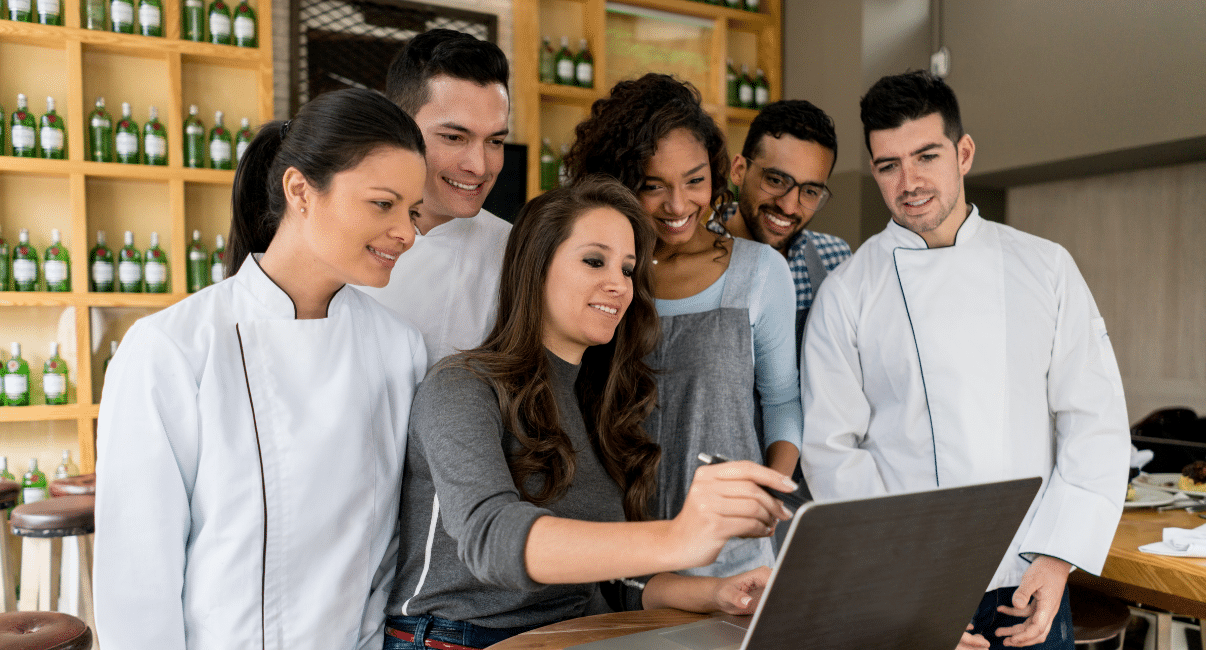
Great hospitality is built on people. The food, the rooms, the ambience all matter, but what guests remember is how your team made them feel. A confident, well-trained staff member who handles a complaint gracefully or anticipates a guest’s need before they ask it is worth more to your business than any renovation or menu update.
The challenge is that hospitality teams are often large, high-turnover, and under constant time pressure. Training gets squeezed into the gaps between shifts. New hires learn by watching whoever happens to be rostered that day. Standards vary depending on who is in charge. And when something goes wrong, it is usually because the training never happened consistently in the first place.
Building a skilled hospitality team requires more than a one-day induction. It requires deliberate, structured training in the skills that actually drive performance. Here are the five that matter most.
The Real Cost of Poor Training in Hospitality
Australia’s hospitality industry has one of the highest staff turnover rates of any sector. Industry estimates consistently put annual turnover between 70 and 80 percent in some segments, meaning many venues replace the majority of their team every year. That turnover is expensive. Recruiting, onboarding, and training a new staff member costs significantly more than retaining an existing one, and that cost compounds every time a trained employee walks out the door.
Poor training is one of the most common drivers of early turnover in hospitality. Staff who feel unsupported, underprepared, or thrown into a role they do not fully understand are more likely to leave within the first 90 days. They are also more likely to make mistakes that affect guest experience, create compliance risk, and increase the burden on the rest of the team.
The businesses that retain staff longest tend to share one thing in common. They invest in structured onboarding and ongoing development that makes people feel capable and valued from day one. Training is not just a compliance requirement in those venues. It is a retention strategy.
What Good Onboarding Actually Looks Like in Hospitality
The typical hospitality onboarding experience looks something like this. A new staff member arrives for their first shift. A senior team member walks them through the basics while also managing service. They shadow someone for a few hours. They get told where things are kept. And then they are on the floor, figuring out the rest as they go.
That approach is inconsistent by design. What a new hire learns depends entirely on who trained them, how busy the venue was, and how much patience the person doing the induction had that day. Different staff members arrive at different standards. Some adapt quickly. Others never quite catch up. And managers spend the next several weeks filling gaps that a structured onboarding process would have covered before day one.
Good onboarding in hospitality starts before the first shift. Digital pre-shift training lets new hires complete induction content, food safety fundamentals, service standards, and venue-specific procedures at home, on their phone, before they arrive. By the time they step into a live service environment they already understand the basics. They can focus on applying knowledge rather than absorbing it under pressure.
That shift reduces supervision burden on senior staff, improves the new hire’s confidence, and creates a documented record of what was covered. It also sets a clear signal that the venue takes development seriously, which matters to staff who are deciding whether this is a place worth staying.
1. Communication and Customer Service
Every interaction a guest has with your team shapes their experience. A staff member who communicates clearly, listens actively, and responds with confidence creates the kind of experience guests come back for and tell others about. A staff member who is uncertain, dismissive, or inconsistent does the opposite.
Communication training in hospitality covers how to handle a complaint without escalating it, how to manage a difficult guest without affecting other guests nearby, how to upsell without making someone feel pressured, and how to deliver consistent service even when the venue is under pressure.
Digital training platforms standardise communication expectations across every staff member. Service scripts, customer engagement protocols, and scenario-based modules that simulate real guest interactions deliver more consistently online than through ad hoc on-the-job instruction. Staff complete the training before their first shift and arrive with a foundation rather than starting from zero.
2. Adaptability and Problem-Solving
Hospitality does not run to plan. Last-minute group bookings, equipment failures, dietary requirements that were not communicated, a kitchen that falls behind during a busy service. The best hospitality staff adapt quickly and solve problems without escalating every issue to a manager.
That kind of adaptability is trainable. Scenario-based digital training puts staff through realistic situations and asks them to make decisions. They practice working through problems in a low-stakes environment before they face them on a busy Friday night. Over time that practice builds the decision-making confidence that makes a team genuinely capable rather than just technically competent.
Role-based learning paths help here too. A front-of-house team member and a kitchen hand face different challenges. Training that reflects the specific situations each role encounters is more effective than generic content that does not connect to anyone’s actual job.
3. Compliance and Workplace Safety
RSA, RCG, food safety certifications, and WHS requirements are not optional. A single compliance failure can result in fines, loss of licence, reputational damage, and in serious cases, personal liability for venue managers and owners.
In New South Wales, serving alcohol to an intoxicated person can attract on-the-spot fines of over $1,000 per incident. Food safety breaches that result in illness can trigger investigations, forced closures, and civil claims. These are not edge cases. They happen to real venues that meant to stay compliant but did not have systems that made it easy to track.
The challenge is that compliance training in hospitality is ongoing, not a one-time event. Certifications expire. Regulations change. New staff join and need to be brought up to standard quickly. Managing all of that manually through spreadsheets and calendar reminders is genuinely difficult at scale.
A digital training platform automates compliance tracking. Every staff member’s certification status is visible in one place. Renewal reminders go out automatically before expiry dates arrive. New staff complete mandatory compliance modules before their first shift and the platform records that completion. When a regulator asks for evidence, it is immediately accessible and complete.
4. Time Management and Efficiency Under Pressure
In hospitality, pace matters. A table waiting too long, a room not turned over on time, a bar order that takes three attempts to get right. These are not just service failures. They are operational inefficiencies that compound across a busy service and affect the experience of every guest in the venue.
Training staff to manage time and prioritise under pressure is one of the most practical investments a hospitality business can make. Microlearning modules that cover task prioritisation, workflow management, and efficiency techniques deliver this content in a format that fits around the job rather than requiring staff to step away from it.
Mobile training is particularly valuable here. Staff complete short modules on their phones during a break, before a shift, or between tasks. The training happens in the time they already have rather than adding to their workload. And because each module is short and focused, the content is more likely to be retained and applied immediately.
5. Attention to Detail
Hospitality is a precision business. The wrong allergen information, a room not checked properly before a guest arrived, a bill that does not match what was ordered. These are small mistakes with large consequences. They damage guest trust, create complaints, and in the case of allergen errors, carry genuine safety risk.
Attention to detail is both a mindset and a skill. Training helps staff understand why the details matter, not just what the correct procedure is. When a staff member understands the consequence of a missed step, they take it more seriously than if they are simply told to follow a checklist without context.
Digital checklists, step-by-step procedural guides, and quality control modules reinforce the standards that consistent service requires. They also create a record of the standard that was set, which matters when a complaint arises and you need to demonstrate that your team was properly trained to avoid it.
Training Needs Vary by Venue Type
A fine dining restaurant has different training priorities to a pub, a hotel, or a fast casual chain. Fine dining teams need deep product knowledge, precise service timing, and the communication skills to guide guests through a menu confidently. Pub and bar teams need strong RSA compliance, crowd management awareness, and the ability to handle a high volume of orders under pressure. Hotel teams need consistency across every touchpoint from check-in to housekeeping to concierge. Fast casual teams need speed, accuracy, and the ability to maintain standards across high staff turnover.
A digital training platform delivers role-specific and venue-specific content rather than a one-size-fits-all induction. Every team member gets the training that is actually relevant to their role and their environment. That specificity makes training more effective and more efficient because staff are not sitting through content that does not apply to them.
How Digital Training Makes These Skills Easier to Build
The five skills above are not new. Every hospitality manager knows their team needs them. The challenge has always been delivering training consistently, at scale, without pulling staff away from service or relying on whoever happens to be available to run the induction that day.
Digital hospitality training solves the consistency problem. The same standard of training reaches every staff member regardless of which venue they work at, which shift they are on, or who their manager is. It happens before the first shift rather than during it. It tracks automatically so nothing falls through the cracks. And it creates a record of what every team member has completed, which matters both for compliance and for understanding where your team’s skills actually stand.
Learnt helps Australian hospitality businesses deliver structured, compliant, and role-specific training in one platform. From pre-shift onboarding to RSA tracking, microlearning modules, and scenario-based skills training, everything runs in one place without creating extra work for venue managers.
Book a free demo and we will show you how Learnt works for hospitality teams across Australia.